Surface Acting: The cost of pretending to be fine
Updated: Jun 19

A research paper published in the Journal of Occupational Health Psychology, drawing on work from the University of Pennsylvania, puts a name to something a lot of employees experience every day but rarely talk about: surface acting.
It is the practice of suppressing how you actually feel and displaying an emotion you do not have. Smiling through frustration. Projecting enthusiasm when you are running on empty. Performing calm when you are anything but.
The research makes something clear that most people already sense intuitively. Pretending to be happy carries a significant emotional cost. And over time, that cost compounds.
It takes more than people realise
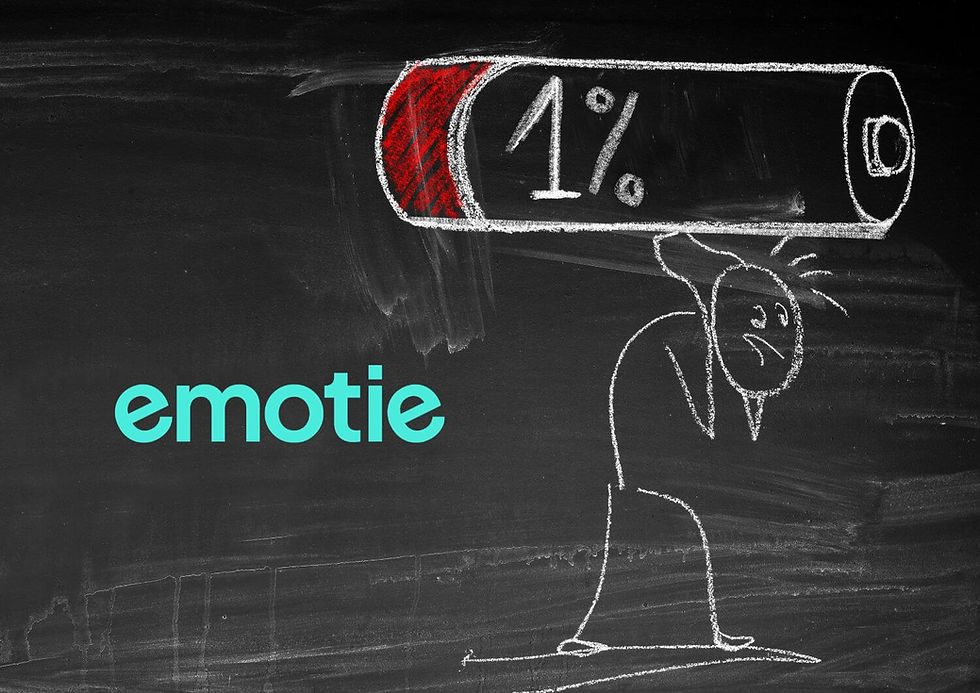
Surface acting is not a passive thing. It requires active effort. Every time an employee pushes down a real feeling and replaces it with a more acceptable one, they are drawing on the same cognitive and emotional reserves that everything else in their working day demands.
The research frames this in terms of self-control. Regulating your emotions at work, especially when those emotions are negative, uses up a finite resource. And when that resource is depleted, people are more likely to make poor decisions, disengage, or struggle to cope outside of work too. The effects do not stay at the office door.
This matters because surface acting is not the exception in most workplaces. It is the norm. Employees who feel they have no outlet for honest expression default to it automatically. Not because they want to, but because the alternative, being visibly unhappy, frustrated or disengaged, feels like a professional risk.
So they absorb it. And the organisation never sees the signal.
The warning signs look like something else
That is the difficulty with the emotional toll of surface acting. It does not announce itself in a way that is easy to interpret or act on.
A team member becomes quieter. Someone who used to contribute freely starts holding back. Absenteeism ticks upward. Productivity dips. Performance reviews pick up a change in attitude. All of these things get attributed to other causes: personal circumstances, workload, a difficult project, when the root cause is something more fundamental.
People have been holding in how they actually feel for so long that it has started to wear them down.
By the time it surfaces clearly enough to prompt a conversation, it is usually further along than it needs to have been. The opportunity to intervene early, when it would have made the most difference, has already passed.
What people need is a low-friction way to be honest
The research points to one factor that significantly changes the picture: autonomy. When people feel they can express their emotions in a way that feels natural to them, rather than having to manage them constantly to meet someone else’s expectations, the impact of surface acting reduces considerably.
That is a finding worth sitting with. It suggests that what employees need is not a wellbeing programme or an annual survey. It is a regular, low-effort, psychologically safe way to say how they are actually doing.
Not in a team meeting where it feels exposed. Not in a formal review where the stakes feel high. Just a simple, everyday mechanism that says: how are you feeling right now, and does anyone know?
What real-time connection looks like
Emotie was built around exactly this idea. By giving employees a consistent and simple way to check in with how they are feeling, in the moment, the platform creates a continuous stream of honest information that managers can see and respond to in real time.
That changes the dynamic significantly. Managers are no longer waiting for something to go wrong before they have a conversation. They are seeing the signals early, when a check-in or a small adjustment can make the difference.
The conversations that matter most are rarely the big ones. They are the quiet exchanges that happen because someone noticed something early enough to ask. Emotie makes those conversations more likely, because the information that should prompt them is no longer hidden.
What organisations can do now
Workplaces that rely on employees to surface their own struggles, unprompted, in environments that do not feel emotionally safe, will keep missing the signals. The cost of that, in disengagement, absence, and attrition, is significant and largely avoidable.
The research is clear: people know how they feel. What they often lack is a place to say it.
Give them that, and everything else becomes easier.